You’ve set the screen time limits and blocked the obvious websites, but you still have that nagging feeling. The internet is a vast, evolving landscape, and dangers often lurk not on specific sites, but in the language used within search engines, social media feeds, and messaging apps. As a child safety specialist with ten years of experience, I’ve learned that the most effective digital boundaries are built with words. A strategically crafted parental control keywords list is your most powerful tool for proactive, granular protection.
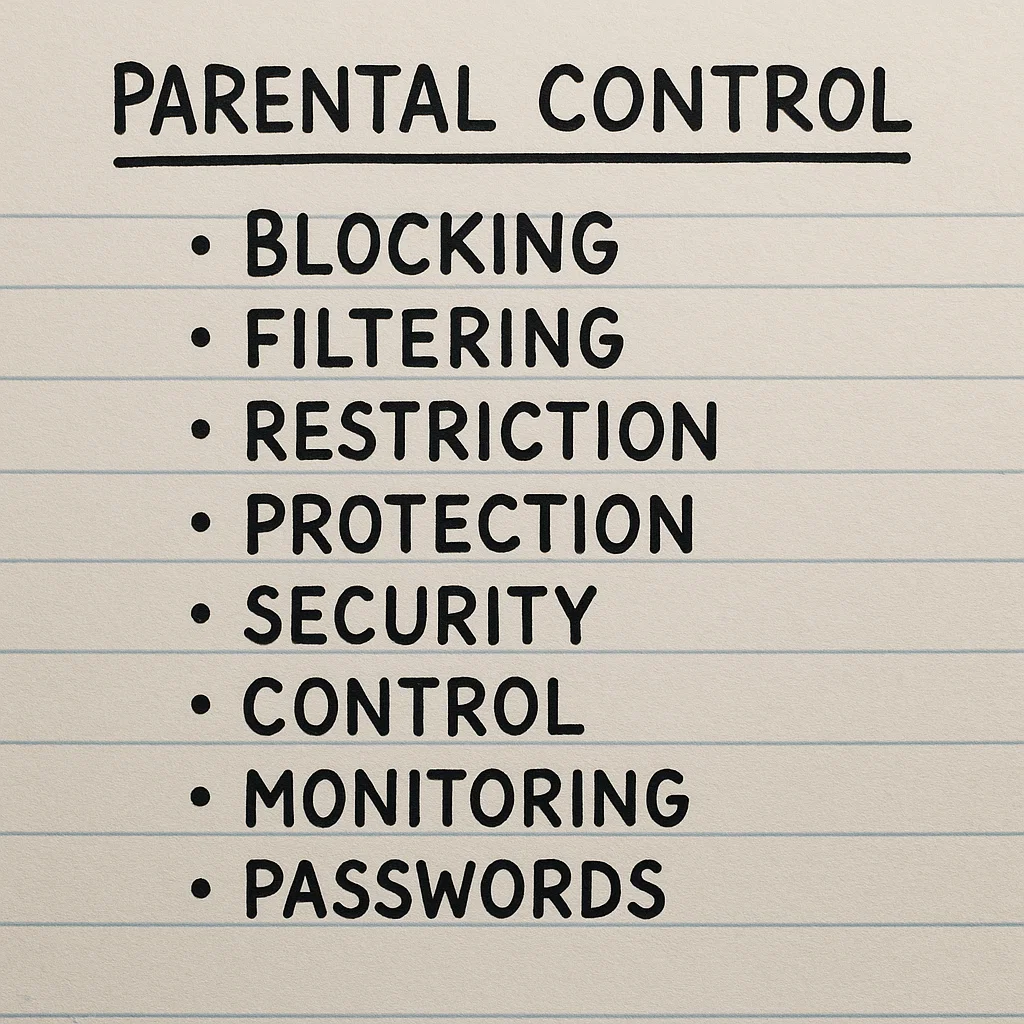
This guide is designed to move you from a broad-strokes approach to a precise, intelligence-driven strategy. I will provide you with a comprehensive, categorized parental control keywords list that I have refined through years of work with families. More importantly, you will learn how to effectively implement this list using both native device settings and powerful third-party applications that offer a truly robust safety net for your child.
Why a Keyword List is Your First Line of Digital Defense
Blocking websites is reactive; you're always one step behind new platforms and proxy sites. A dynamic parental control keywords list, however, is proactive. It filters the very building blocks of harmful content—the words themselves—across browsers, apps, and social networks. This method is crucial for protecting children from:
Explicit and Pornographic Content: Creating a barrier against sexually explicit material.
Self-Harm and Pro-Eating Disorder Content: Blocking access to dangerous online communities.
Violence and Extremism: Preventing exposure to graphic content and radicalizing ideologies.
Substance Abuse: Filtering out glorification or instructions related to drugs and alcohol.
Cyberbullying and Hate Speech: Limiting exposure to harmful language and targeted harassment.
The Expert-Curated Parental Control Keywords List
A successful list is organized and detailed. Think of it in categories, which allows for easier management and updating. Use this foundational parental control keywords list as a starting point, tailoring it to your child's age and maturity.
Category 1: Explicit Adult Content
This category requires specificity and an understanding of common slang and misspellings.
Core Terms: porn, xxx, adult, sex, sexy, nude, nudes, onlyfans, hookup, dating
Specific Acts: Include explicit terms for sexual acts.
Slang & Misspellings: pron, p0rn, secs, only fans, OF
Category 2: Self-Harm, Suicide, and Eating Disorders
This is a critical category for mental health protection. Comprehensiveness is key.
Self-Harm & Suicide: suicide, kill myself, self harm, cutting, cutting myself, anorexia, bulimia
Pro-Community Terms: thinspo, bonespo, pro-ana, pro-mia, edtwt (Eating Disorder Twitter)
Specific Methods: Include terms related to common methods.
Category 3: Violence, Weapons, and Gore
Protect your child from content that can desensitize or cause anxiety.
Weapons: gun, guns, ammunition, bomb, how to build a bomb, knife fight
Graphic Violence: murder, gore, torture, terrorist attack, mass shooting
Extremist Groups: List names of known violent organizations.
Category 4: Drugs and Alcohol
Block content that promotes or instructs on substance abuse.
Illegal Drugs: cocaine, heroin, meth, ecstasy, how to buy drugs, weed (and specific drug names)
Prescription Drug Abuse: oxy, xanax, percs, vikes (common slang for prescriptions)
Paraphernalia: bong, pipe, huffing
Category 5: Hate Speech and Bullying
Filter out language that promotes discrimination or harassment.
Slurs: All common racial, ethnic, and homophobic slurs.
Hate Terms: hate group, white power, kill all [group]
Implementation: From Basic Settings to Advanced Enforcement
Creating the list is the first step; making it work is the second. The effectiveness of your strategy hinges on the tools you use.
The Shortcomings of Built-in Controls
Platforms like Google and YouTube offer basic safety modes like SafeSearch and Restricted Mode.
The Critical Flaw: These are easily bypassed by switching browsers, using a VPN, or turning on mobile data. They also lack the ability to implement a custom, detailed parental control keywords list, offering only broad, often ineffective, category filters.
The Professional Solution: Dedicated Parental Control Apps
For true, cross-platform, and tamper-resistant protection, dedicated apps are essential. They can enforce your custom keyword list across search engines, social media, and even in some messaging platforms.
1. mSpy: For Granular Alerts and Comprehensive Monitoring
mSpy is a powerhouse known for its extensive features. Its keyword alert system is ideal for proactive oversight.

Key Features for Keyword Management:
Keyword Alerts: Get instant notifications when a blocked word is used in searches, messages, or on social media.
Social Media Monitoring: Tracks activity and keywords on platforms like Instagram, Snapchat, and Facebook.
Web Filtering: Blocks websites based on your keyword list and categories.
App Blocking: Remotely disable apps where risky content is shared.
Best For: Parents who need detailed insights and real-time intelligence on their child's digital activity.
How to Get Started with mSpy:
For the highest level of oversight and proactive alerts, mSpy is an industry leader.
TRY NOW
2. Parentaler: Streamlined and User-Friendly Protection
Parentaler offers a clean, intuitive interface that makes implementing parental controls straightforward and effective.
Key Features for Safety:
App and Web Blocker: Easily block inappropriate apps and websites.
Screen Time Management: Set healthy limits on overall device use.
Panic Alert: A vital safety feature for your child to use in emergencies.
Content Filtering: Provides broad category-based filtering to complement a custom keyword strategy.
Best For: Parents who want an effective, no-fuss solution for creating a safer digital environment.
How to Get Started with Parentaler:
For a user-friendly and powerful tool, Parentaler is an excellent choice.
BUY NOW
3. Eyezy: All-in-One Insights and Management
Eyezy combines powerful monitoring with an intelligent alert system, making it ideal for data-driven parents.

Key Features for Keyword Blocking:
Magic Alerts: Get notified based on specific keywords found in messages, searches, and social media.
Social Media Tracker: Monitor interactions and posts across multiple platforms.
Invisible Shield: Operates discreetly for uninterrupted protection.
Web Magnifier: See the full browsing history and bookmarks on the target device.
Best For: Parents who want to combine broad monitoring with specific, customizable keyword alerts to guide conversations.
How to Get Started with Eyezy:
For a blend of powerful monitoring and customizable alerts, Eyezy provides a complete solution.
TRY NOW
Maintaining Your Defenses: A Living Document
Your parental control keywords list is not a one-time setup. It is a living document that must evolve.
Communicate Openly: Discuss online safety with your child, framing these tools as protective measures.
Review Quarterly: Update your list every few months. Add new slang and remove outdated terms.
Leverage App Data: Use the reports from mSpy or Eyezy to identify new, concerning terms used in your child's digital circles.
Conclusion
A thoughtfully constructed and properly enforced parental control keywords list is one of the most significant steps you can take for your child's online safety. It provides a dynamic, intelligent layer of defense that static website blocks cannot match.
You now hold the foundational knowledge and a concrete list to begin. Don't leave your child's digital well-being to chance. Start by customizing your keyword list today. For peace of mind and robust protection, invest in a dedicated parental control app like mSpy, Parentaler, or Eyezy to ensure your boundaries are actively enforced across the entire digital landscape.
Frequently Asked Questions (FAQs)
1. Will a keyword block list interfere with my child's schoolwork?
It might, which is why communication and periodic review are essential. A term like "breast" could be blocked but is also relevant for a biology class. Advanced apps like mSpy allow you to view triggered alerts, so you can adjust your list for precision and even temporarily pause protections during research-intensive school projects.
2. Is it ethical to use these tools without telling my child?
For younger children, it can be seen as a universal safety setting. For teenagers, most experts recommend transparency. Explain that it's a safety measure, not a spying tool, similar to rules about stranger danger. This approach can build trust and open a dialogue about responsible online behavior, rather than creating secrecy and resistance.
3. How can I possibly keep up with all the new slang?
This is a common challenge, but not an insurmountable one. Stay casually engaged with your child's online world. Ask them about new apps and trends. Furthermore, the monitoring features of your parental control app are your best intelligence tool. The reports from mSpy or Eyezy will show you the actual language being used, allowing you to identify and block new slang as it emerges.