A Bubble Color Cannot Settle This
If a child is being shut out, bullied, or pressured through messages, look for a pattern instead of treating one missing receipt as proof.
Review Family Messaging SafelyStart with this limitation: Apple does not send a “you were blocked” notice. A missing “Delivered” label, a green bubble, or a call that reaches voicemail can each happen for ordinary reasons. I have seen families assume the worst during a dead battery, a school Focus schedule, and even a number change. Check several signals over time before drawing a conclusion.
How iMessage Delivery Works
An iPhone first checks whether the destination phone number or email address can receive iMessage. When it can, the message travels through Apple’s service over Wi-Fi or cellular data and appears blue. The recipient may receive it on an iPhone, iPad, or Mac signed in to the same Apple Account.
A green bubble means the phone used a carrier messaging service instead. Depending on the devices and carrier, that may be SMS, MMS, or RCS. It can happen because iMessage is unavailable, the other person moved to Android, or Send as Text Message is enabled under Settings → Apps → Messages on current iOS versions. Older iOS versions place Messages directly in Settings.
The labels beneath a blue message have narrower meanings than people often give them:
- No label — Apple has not shown a delivery confirmation on that message
- “Delivered” — at least one device associated with the recipient accepted it
- “Read” — the conversation was opened and the recipient allows read receipts
Read receipts can be disabled globally or for one conversation. Delivery receipts are different. Focus and Do Not Disturb usually silence alerts on the recipient’s side; they do not normally stop an otherwise connected device from showing a message as delivered.
The Signs People Cite — and What They Actually Mean
1. Your Messages Send as Green Bubbles (SMS) Instead of Blue
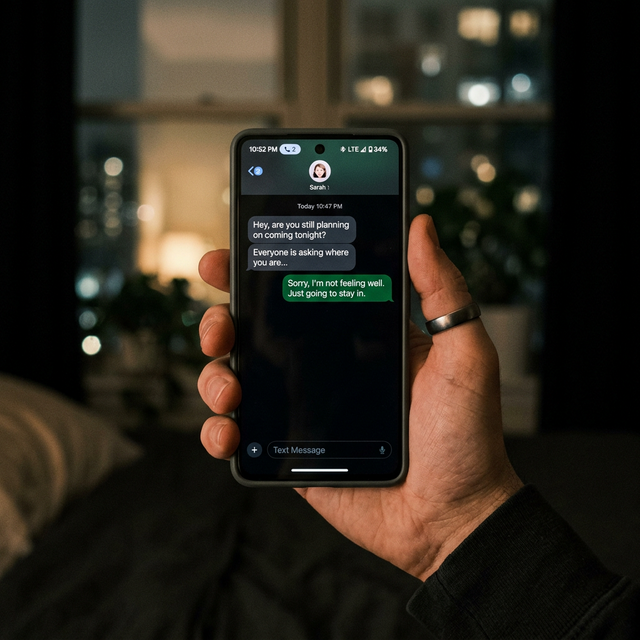
A sudden switch from blue to green gets attention, but it is weak evidence of blocking by itself. Apple does not expose a simple rule saying that a blocked iMessage must become SMS. In many cases, the sender may continue to see a blue message without a delivery confirmation.
Green messages have several routine explanations:
- The recipient changed from an iPhone to an Android phone
- iMessage is turned off under Settings → Apps → Messages
- Either device temporarily lacks a usable data connection
- The phone number is no longer registered for iMessage
- Apple’s iMessage service is having an outage
- Your phone retried the message through the carrier after iMessage failed
Open the conversation and inspect the text field before sending another message. If it says “Text Message” rather than “iMessage,” you know which service the phone plans to use; you still do not know why the service changed.
What to watch for: note whether the change affects only one contact and whether it persists after both phones are likely back online. A single green message during a flight, school day, or network outage tells you very little.
2. No “Delivered” Receipt Under Your Message
When a blue message remains without “Delivered,” it has not produced the confirmation you normally see. Blocking is one possible explanation, but the sender’s screen cannot distinguish a block from an unreachable recipient device.
The label may also be absent when:
- The recipient’s devices are powered off or have exhausted their batteries
- Their devices have no Wi-Fi or cellular data
- They signed out of iMessage or changed the reachable address
- The message is still waiting during a temporary Apple or carrier problem
- The conversation is addressed to an old phone number or email
- They recently changed devices and activation is incomplete
Give this signal time. If “Delivered” appears later, the device was probably unreachable. Turning read receipts off does not remove “Delivered,” and Focus mode alone is not a sound explanation for a missing delivery confirmation.
3. Calls Go Straight to Voicemail After One Ring
Repeated calls that briefly ring and then reach voicemail can fit a blocked-number pattern. The exact behavior varies by carrier, network, voicemail configuration, and iOS version, so counting rings is not a dependable test.
The same result can occur when:
- Sleep, Driving, Work, or another Focus silences the call
- The phone is off, out of coverage, or using Airplane Mode
- Silence Unknown Callers or carrier spam screening is active
- The recipient declines the call
- Call forwarding is configured
- The carrier cannot complete the call normally
Do not make a string of test calls. Apart from being intrusive, repeated attempts do not make the evidence clearer. One call at a reasonable time is enough to observe the behavior.
4. FaceTime Calls Fail Immediately
An immediate “FaceTime Unavailable” message can accompany blocking, but it also appears when FaceTime is disabled, the addressed number or email is no longer registered, Screen Time restrictions are in place, or the other device has no connection. Check whether FaceTime works with another contact before blaming the person at the other end.
The Most Reliable Pattern
No visible iPhone clue proves a block. Concern becomes more reasonable only when several changes are specific to one contact and continue across different times of day:
- →Previously delivered iMessages repeatedly show no delivery confirmation
- →Calls from the same number consistently reach voicemail
- →iMessage and calls work normally with other contacts
- →A mutual contact can reach the person through the usual channel
Even that pattern remains circumstantial. A lost phone, changed number, travel, or a decision to disconnect can look almost identical. Treat it as a reason to pause, not as permission to bypass someone’s boundary.
Non-Invasive Ways to Check
These checks focus on your own device and ordinary communication. None requires access to another person’s phone or account.
Ask a Mutual Contact
Ask once, neutrally: “Have you heard from them recently?” Do not recruit a friend to deliver messages after the person has chosen not to respond. If nobody can reach them, a device or availability issue is more plausible. If others can, accept that the person may want space even though the iPhone cannot confirm a block.
Try Calling from a Different Number
A different household phone can help rule out a network problem, but use this carefully. Make one legitimate call only when there is a practical reason to reach the person. Calling repeatedly from unfamiliar numbers to get around a possible block is not a harmless test; it disregards a boundary and may become harassment.
Check iMessage Status for Other Contacts
Send a normal message to someone else who uses iMessage. If it turns blue and receives “Delivered,” your service is functioning. You can also open Settings → Apps → Messages → Send & Receive and confirm that your own phone number and intended Apple Account address are selected.
Confirm You Have the Right Number or Apple ID
Tap the contact at the top of the thread and check the destination. Old conversations can continue pointing to an email or number the person no longer uses. Avoid editing their contact card until you have confirmed the new details through a trusted source; otherwise you can make the thread harder to diagnose.
Check the Date and Time on Your Device
Incorrect time settings can interfere with account and messaging services. On an iPhone, open Settings → General → Date & Time and enable Set Automatically. Then confirm Wi-Fi or cellular data works. Restarting the phone is reasonable; repeatedly toggling iMessage off and on can create an activation delay and is rarely the best first step.
For Parents: When Your Teen Thinks They Are Being Blocked
A teenager who says, “They blocked me,” is usually asking a social question, not a networking one. The useful first response is not to inspect every bubble. Ask what happened just before the contact stopped responding and how your teen is feeling now.
I would pay closer attention when the silence spreads across several friends, follows threatening messages, or coincides with refusing school, sleep disruption, or a sudden withdrawal from usual activities. One unanswered thread may be ordinary conflict. A coordinated pile-on or a fearful child needs a different response.
Start With the Conversation, Not the Verification
Try specific, calm questions: “What was the last message about?” “Is anyone sharing screenshots?” “Do you feel safe seeing this person tomorrow?” These invite context without forcing the child to surrender the phone. If there is a credible threat, preserve the relevant messages and involve the school or appropriate local support.
Use It as a Window Into Social Dynamics
Blocking can be a healthy boundary, an impulsive disagreement, or one part of group exclusion. Look at the surrounding events. Did several chats go quiet on the same afternoon? Did the child leave a group conversation? Is an adult or unknown contact pressuring them to move to a different app?
For a family already using openly discussed supervision, parental monitoring tools can help identify broader changes in communication. They should support a conversation, not replace one. Access must match the child’s age, device ownership, consent expectations, and local law.
Do Not Weaponize It
Do not demand passwords or contact another family over a single missing receipt. A child may need help tolerating rejection as much as help reporting bullying. Explain what you are checking and why. If monitoring is necessary for safety, set a narrow purpose and review when it can be reduced.
What Not to Do
Websites and apps that promise to reveal an iMessage block cannot obtain a special “blocked” status from Apple. At best they repeat the same ambiguous clues. At worst they collect account credentials, phone numbers, or payment details.
Do Not Do List
- Do not spoof a caller ID to make the person answer. Laws differ, but using a false identity to deceive or harass can carry serious consequences.
- Do not install “block detector” apps or give them Apple Account credentials. They cannot read a definitive block flag from iMessage.
- Do not access another person’s Apple Account, iCloud, or device without authorization. Parents should also review our legal use guidelines and apply age-appropriate, transparent rules.
- Do not send repeated test messages. Silence may be intentional, and persistence can turn an awkward situation into harassment.
- Do not create another Apple Account to evade a boundary. If there is a genuine welfare emergency, use an appropriate trusted adult or emergency channel.
When the Real Issue Is Bigger Than a Block
The bubble is not the part I would focus on when a child’s safety may be involved. Look beyond the delivery status when:
- Several peers exclude or target the child across messages, games, and social platforms
- The child blocks someone because they feel threatened, pressured, or controlled
- Communication changes coincide with panic, isolation, sleep loss, or avoiding school
In those cases, document what the child is willing to show you, listen before acting, and choose a proportionate response. Immediate threats, sexual exploitation, or fear of physical harm call for qualified local help rather than more technical testing.
Keyword alert tools may help a parent notice language connected with threats or bullying on a device they are authorized to supervise. Alerts can miss slang and misunderstand jokes, so review context with the child. Our family safety plans explain the available options; none can tell you with certainty that an outside contact used Apple’s block feature.
Look for Context, Not a Secret Indicator
One message status is ambiguous. A transparent family conversation about repeated exclusion, threats, or abrupt changes gives you much more useful information.
See Family Safety Plans →About This Article
This guide reflects observable iMessage behavior on current iOS versions. Apple does not provide senders with a definitive blocked-status indicator, and carrier behavior can vary. Menu names may differ on older iOS releases. The article is educational and is not legal advice.