What Does WB Mean?
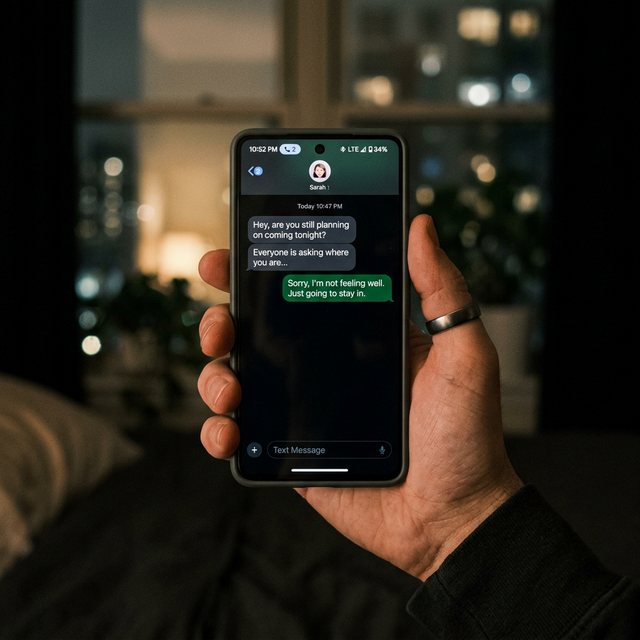
WB primarily stands for "Welcome Back."
It is most frequently used in online gaming chats, Discord servers, and group text messages. When someone leaves the chat (AFK - Away From Keyboard) and returns, their friends will often type "WB" to acknowledge they have returned.
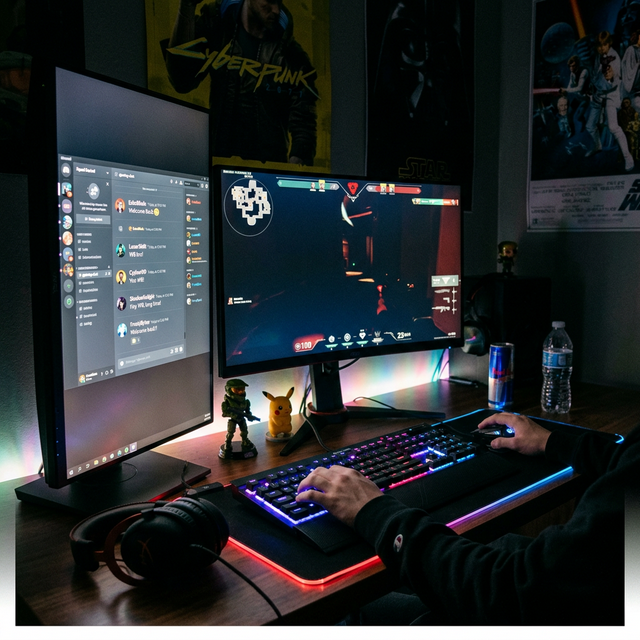
"WB" is standard internet etiquette in gaming and group chats — it simply means "Welcome Back."
See Who They're Gaming With
Know who your teen is chatting with on Discord, in-game, and across messaging apps — without them knowing.
Monitor Their ChatsHarmless vs. Misread Uses
While WB is almost exclusively harmless, there is always a slight misread risk.
The Everyday Usage (Gaming & Group Chats)
- Texter 1: "Back, phone died."
- Texter 2: "WB"
This is standard internet etiquette and perfectly safe.
The Misread Risk
Parents scrolling quickly through a child's message preview might misinterpret "WB." It could be misread as "Write Back" (which is mostly outdated). The key takeaway is: parents should avoid over-interpreting short, common acronyms.
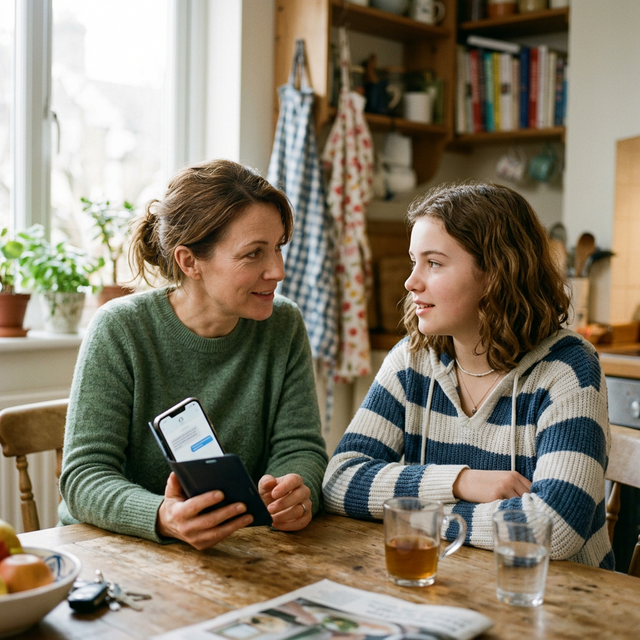
Asking about slang without accusing keeps the conversation open and builds trust.
Stay Ahead of Teen Slang
Use keyword alerts to flag risky slang automatically — no need to memorize every new acronym yourself.
Set Up Keyword Alerts →Where WB Actually Shows Up: Lobbies, Servers and Group Chats
WB is a small piece of etiquette with a very specific habitat. It appears in game lobbies, Discord servers and group texts, and almost nowhere else. The ritual is fixed: someone types "brb" or "afk", disappears for a round, comes back, and the chat answers "wb".
Discord already posts "back online" under a returning member, yet teenagers type WB anyway, because it is a greeting rather than information. That is the first thing to understand: WB is the digital version of "welcome back" said out loud when someone walks into a room, not a coded message.
The second pattern is the joke version. When a friend returns after three weeks of silence the group replies "wb" with a meme attached. The longer the absence, the more sarcastic the tone, and the warmer the message actually is: a "wb from the dead" is a sign the group noticed they were gone.
The third is the re-opener, WB used to restart a dead thread late at night ("anyone still up? wb"). Harmless, and it is why parents usually see this word at the worst possible hour.
Only one context is worth a question rather than a shrug: a WB from an account your child cannot name, or a WB followed immediately by a request — a gift card, a photo, moving to another app. At that point the word is not etiquette, it is a stranger restarting contact, and the account matters while the acronym does not. The word itself needs no supervision; the schedule around it sometimes does, which is why late-night lobbies are the real issue in limiting gaming time on a child's phone.
Same Letters, Three Different Senders: WB on Discord, Roblox and Snapchat
WB is one of the few slang terms where the app decides who wrote it. In a Discord server or a Roblox experience the greeting is frequently not from a person at all: a join notice does the welcoming, and the letters arrive attached to a system line rather than a friend's name. Learning to tell those apart removes most of the worry a screenshot can cause.
There are three flavours. The system greeting fires when someone reconnects and is generated by the platform, not typed. The human greeting is a friend typing wb after a gap. The re-opener is wb used deliberately after an argument or a long silence, as an olive branch. All three look the same in a screenshot; what separates them is placement and timing. A wb on its own line, all lowercase, arriving seconds after a connection, is a system message or a reflex. A wb after a real gap, followed by a question about you - "wb, how was practice" - is the human kind, and usually a warm one.
Then there is the question of who is in the room. Public Discord servers and popular Roblox experiences are open spaces: anyone can be present and the join greeting fires for everyone, so a wb from a name your child can't place is not automatically a stranger. It is, though, the moment to check two things - whether the space is invite-only or public, and whether the account is one they know from school. If the letters are followed by a move into direct messages, that shift is the part worth asking about, not the letters. The behaviour that carries risk is the move to a private channel where the rest of the room can't see it, and that is the pattern our guide to keeping kids away from online predators describes step by step.
The third flavour deserves a line of its own, because it is the one that can matter. A friendly wb from a friend after a real argument is repair, and it is healthy. The same word from an account that was blocked last month, or from someone who was removed from a group chat a week ago, is a re-entry attempt dressed as politeness. Reading who re-opened contact tells you more than reading the word.
Parent Script: Asking Without Accusing
If you see a new abbreviation on your child's screen and feel a twinge of anxiety, don't interrogate them. Asking what a term means without sounding accusatory is an art form.
Try this: "Hey, I saw a slang term the other day: 'WB.' I wasn't sure what it meant—do you know?"
By framing yourself as the learner, you reduce their defensiveness and invite them to be the expert. If you know the definition but just want to confirm how they use it, try: "I know WB usually means 'Welcome Back,' but I've heard slang changes fast. Is that still what it means in your group?"
What WB Looks Like From the Other Side of the Screen
Every wb has a sender and a receiver, and parents usually only ever see the receiving end. Come back into a family group chat after a week of being busy and you may find a "wb" waiting, sometimes with an eye-roll emoji attached. It is not sarcasm. Someone counted the quiet days and said so in the shortest way the language allows.
That distinction is worth understanding, because teenagers separate two things parents tend to bundle together: being noticed and being tracked. A wb says "we saw you were gone". A question about where they were says "we were watching while you were gone". The first is welcome, and it builds the habit that makes the second unnecessary; the second gets a one-word reply and a phone that gets quieter. Families who end up with the first kind of message in reserve usually got there by monitoring a child's phone without spying rather than by watching harder.
If you do end up inside one of their spaces - a family Discord server, a shared Minecraft realm, the group chat half the street is in - the etiquette is smaller than it looks. Say hello once and then read. Type wb yourself when someone comes back, and gtg when you go, because using the same three-letter courtesies signals that you are reading the room rather than supervising it. Do not answer every message, and do not ask about a wb you were not part of.
There is one place the word is useful to parents directly. When a child comes back from a screen-free stretch - a camp, an exam week, a weekend with grandparents - the group says wb, and the child is reabsorbed into it in a single line. Borrowing that is cheaper than an audit: "wb" and a question about what they missed does more than a list of everything that piled up while they were away.
The honest caveat: a teenager who knows a parent is in the room usually opens a second room. That is not deception, it is what anyone does in front of an audience, and it is why membership is the weakest form of oversight there is. The conversation about which spaces are fine and which are not outlasts any invite you receive, and it is much easier to have before you are added than after.
The Auto-Generated WB: When the Platform Says It, Not a Person
Not every welcome back in a screenshot was typed by a friend. Large Discord servers run greeting bots that post on arrival, several games put a rejoin banner across the screen when a player reconnects mid-match, and plenty of apps drop a stock "welcome back" line when someone opens them after a break. Read over a shoulder, all of it looks like conversation.
That matters for two reasons. The first is volume: in a server with thousands of members, a wall of wb says nothing about who your child actually talks to, because most of it came from scripts and strangers. A parent counting greetings will overestimate the social life and learn nothing about it. The second is attribution: when the words came from the platform, there is no sender to interpret, no tone, and no relationship behind them.
The practical question to ask of any thread is "is this a person or the app?". Auto-greetings have tells - identical wording, timestamps to the second, a bot name in the corner, no reply to anything anyone said. A human wb almost always has something attached to it: "wb, we saved you a spot", "wb, we thought you'd gone to bed".
So when a child shows you a chat, the interesting parts are the small rooms: the four-person group with the school friends, the family server, the party chat. Those are the places where a wb was typed by someone who noticed an absence, and they are also the places where the same courtesy is expected of your child. Parents who want an accurate picture are better off asking which servers and groups actually matter than reading the greeting feed of a big one; our guide to monitoring a child's social media use covers how to keep that review narrow.
Deepen Your Slang Vocabulary
To better understand your teen's chat habits, review the following guides:
For a full rundown, visit our Teen Slang & Emoji Dictionary and learn how to use keyword lists and alerts effectively.