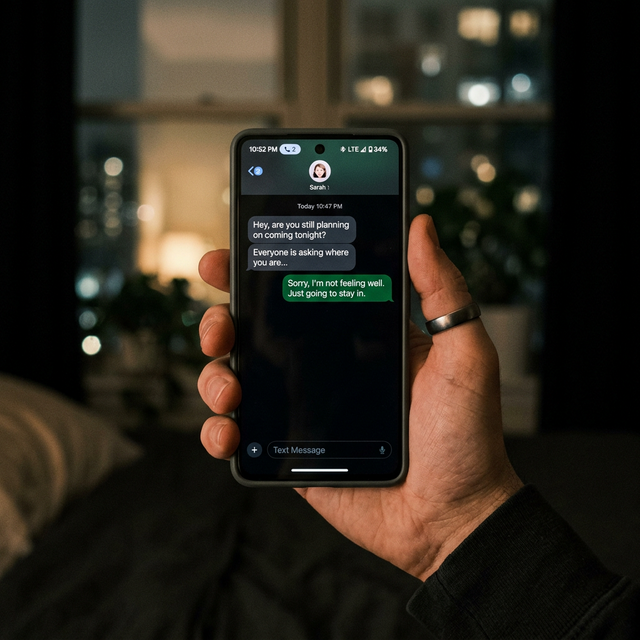
Defining POS in Texting
If you're wondering "what does POS mean in text?", you are likely seeing your teen use this acronym. In the context of teen messaging, POS stands for "Parent Over Shoulder."
It is a secrecy signal used to warn the person on the other end of the chat that a parent or guardian is nearby and can see their screen. While it has another common meaning—"Piece of Sh*t"—when used as an abrupt warning during a conversation, it almost always means "Parent Over Shoulder."

POS is a rapid warning sign that an adult is nearby and might be looking at the screen.
Examples: How POS is Used
Understanding the context is crucial. Here are scenarios showing when POS is harmless versus when it's a red flag.
Scenario 1: The Harmless Boundary (Privacy from Parents)
Teen 1: "Did you see who Sarah was sitting with at lunch?"
Teen 2: "POS"
Teen 1: "Kk talk later."
Why this is harmless: Teens need normal, developmentally appropriate privacy to gossip about friends or discuss crushes. Not every POS means they are doing something dangerous.
Scenario 2: The Concerning Warning (Hiding Risky Topics)
Teen 1: "Are you bringing the stuff to the party tonight?"
Teen 2: "POS, delete that."
Why this is concerning: Combined with instructions to delete messages or discussions about "stuff," this POS signals active concealment of high-risk behavior.
What Are They Hiding?
Sometimes POS means innocent gossip. Sometimes it means hiding dangerous activities. Find out the truth without looking over their shoulder.
See Their Actual TextsParent Playbook: How to Respond
Finding out your child is using "POS" shouldn't trigger an automatic punishment. Here is a playbook for addressing it ethically and constructively.
3 Conversation Openers
- "I noticed you use 'POS' sometimes. I want you to know you're allowed to have private conversations with your friends, but I also need to make sure those conversations are safe."
- "When you warn your friends that I'm nearby, what kinds of things are you usually trying to keep private?"
- "I'm not going to read every message you send, but if I think you're in danger, I will intervene. Are there topics you and your friends discuss that you feel uncomfortable sharing with adults?"
3 Boundary-Setting Options
- Device-Free Zones: Establish rules like "No phones in bedrooms past 10 PM" to reduce the need for late-night secret texting.
- The Trust Contract: Agree that as long as they maintain good grades and behavior, they get more privacy. If trust is broken, monitoring increases.
- Open Door Policy: If they need to talk privately with friends about sensitive issues, they can do so in a public area of the house but with headphone privacy.
3 Monitoring and Mitigation Steps
Ensure you stay within your legal-use policy when implementing these steps:
- Keyword Alerts: Instead of reading every text, set up alerts for high-threat words (e.g., drugs, self-harm) alongside POS. Read our guide on keyword blocking.
- Time Windows: Use parental control features to limit app usage during late-night hours.
- Device Check-ins: Conduct random, agreed-upon "device spot-checks" rather than covert surveillance.
Platform Contexts for POS
You'll often find "POS" used in rapid-fire communication platforms like Snapchat DMs, Instagram Direct Messages, and SMS Group Chats. Because these platforms emphasize quick, often disappearing messages, acronyms like POS are essential for immediate warnings.
For a broader look at the language your kids are using, check out our comprehensive Teen Slang & Emoji Dictionary.
See Past The Secrets
Knowing that "POS" means "Parent Over Shoulder" doesn't tell you what they are hiding. To understand the true tone and context of their digital life, you need the full picture.
Explore Parental Dashboards →