You hand your child a tablet, hoping they'll enjoy an educational game or watch a fun cartoon. But as soon as the browser opens, your stomach tightens. The vast, unfiltered internet lies just a click away—a world of inappropriate content, malicious ads, and unpredictable algorithms. This moment of digital vulnerability is a universal parenting experience in the modern age. The standard browsers pre-installed on our devices—Chrome, Safari, Edge—were built for adults, not for curious young minds.
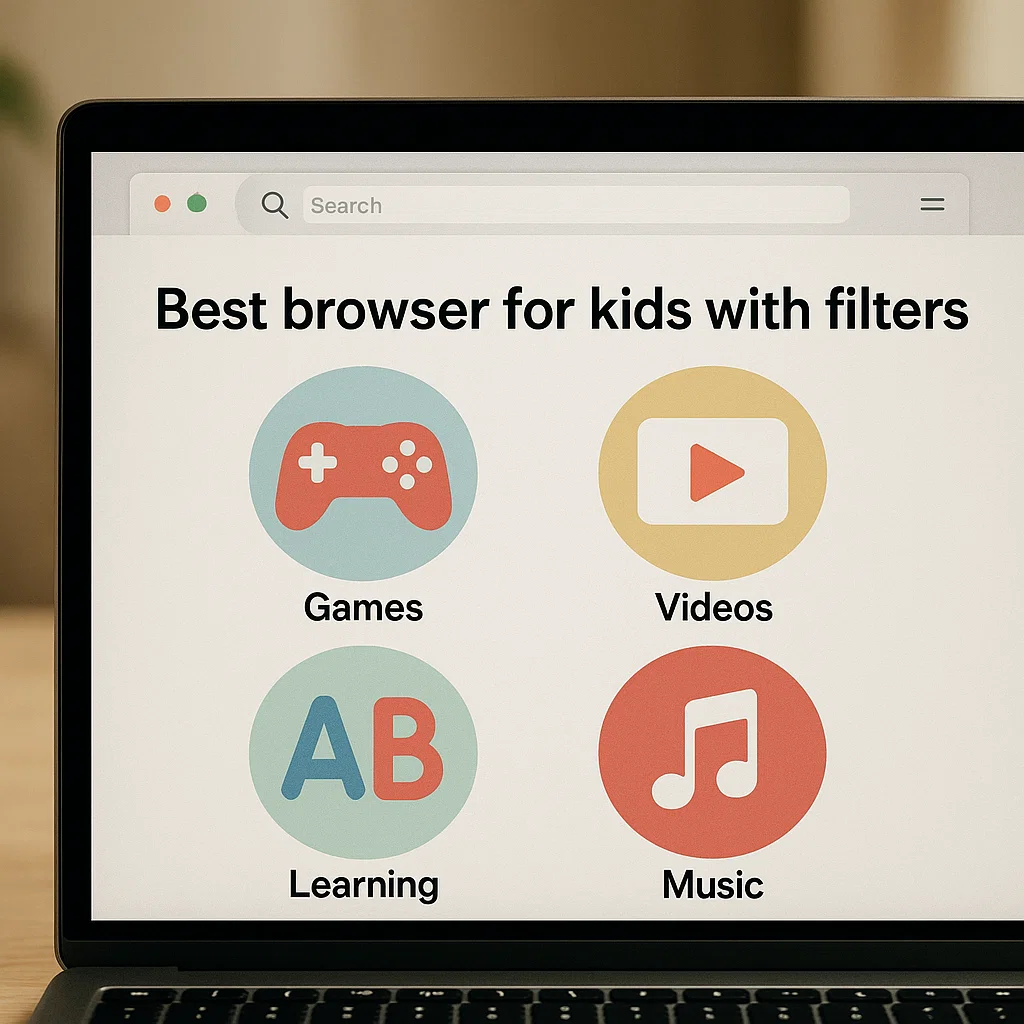
The good news is that you don't have to choose between granting internet access and ensuring your child's safety. A new category of software is designed specifically for this challenge: children's web browsers with robust, built-in filtering systems. As an expert with ten years in digital safety, I have tested and evaluated countless options to help you find the best browser for kids with filters. This guide will not only review the top dedicated browsers but also show you how to reinforce their security with powerful device-wide parental controls, creating a truly safe digital environment for your family.
Why a Standard Browser Isn't Safe for Your Child
Mainstream browsers like Google Chrome and Apple Safari are gateways to the entire web, both the good and the bad. While they offer some basic parental controls, these are often easy to bypass and don't provide a truly curated experience. The primary risks include:
Inappropriate Content: A simple mistyped word in a search bar can lead to explicit or disturbing results.
Advertising Trackers: Children are vulnerable to sophisticated advertising networks that collect data and manipulate behavior.
Autoplay and Algorithms: YouTube's autoplay feature, for example, can lead a child from a harmless video to a completely inappropriate one in just a few clicks.
Lack of Positive Curation: Standard browsers don't actively promote high-quality, educational, and age-appropriate content.
A dedicated children's browser addresses these issues head-on by fundamentally changing the online experience from an open exploration to a guided, protected journey.
What Makes a Truly Great Kids' Browser?
When searching for the best browser for kids with filters, you should look for specific features that go beyond a simple "safe search" mode. The most effective options share these key characteristics:
Pre-Approved Content: The browser should provide a library of hand-picked, whitelisted websites that are known to be safe and educational.
No Arbitrary URL Entry: The address bar should be removed or locked down, preventing children from typing in any website they want.
Robust, Automatic Filtering: Any search functionality within the browser must use a powerfully filtered search engine that actively blocks inappropriate text, images, and videos.
An Engaging, Age-Appropriate Interface: Large icons, simple navigation, and a colorful design make the browser appealing and easy for a child to use independently.
Customization for Parents: The ability for parents to add their own approved websites to the whitelist is essential for tailoring the experience to their child's interests.
Top Contenders for the Best Browser for Kids with Filters
Based on hands-on testing and parent feedback, here are the leading dedicated kids' browsers available today.
KidiSafe Web Browser
KidiSafe is a strong contender for the title of best browser for kids with filters. It is designed specifically for younger children and operates on a strict whitelist system.
Key Features:
Closed Ecosystem: The browser comes with over 1,000 pre-approved, hand-selected websites. Children cannot access any site outside this list.
No Address Bar: The interface is simplified to large buttons and categories, completely removing the ability to type in a web address.
Parental Control Panel: Parents can create custom profiles for multiple children, add specific websites to the whitelist, and set time limits for browser use.
Ad-Free Experience: All websites are displayed in an ad-free viewer, eliminating the risk of malicious or inappropriate advertisements.
KidiSafe is an excellent choice for parents of children aged 12 and under who want a completely locked-down and worry-free browsing experience.
Mobicip Safe Browser
Mobicip is a more feature-rich option that grows with your child. It combines a safe browser with comprehensive parental controls that extend to other apps and screen time management.
Key Features:
Granular Filtering: Parents can choose from different filtering levels (e.g., Early Childhood, Teen) and block specific website categories.
Supervised Browsing: Unlike KidiSafe's closed system, Mobicip allows for more open browsing but with powerful, real-time filtering that blocks inappropriate content as it's accessed.
Cross-Platform Compatibility: It works on iOS, Android, Windows, and Mac, allowing for consistent rules across all devices.
Activity Reports: Parents receive detailed reports on their child's browsing history and search terms.
Mobicip is ideal for families with children of varying ages, especially teenagers who need a balance of independence and protection.
Kaspersky Safe Kids
While Kaspersky is primarily known as a full parental control suite, its safe browsing feature is a standout component. It integrates seamlessly with the rest of its monitoring and management tools.
Key Features:
Safe Search Enforcement: It can enforce safe search modes on YouTube and popular search engines like Google and Bing.
Web Content Filtering: Blocks access to sites with adult content, violent material, and other inappropriate categories.
App and Screen Time Management: Extends protection beyond the browser to control overall device usage.
Location Tracking: Includes real-time location tracking and geofencing for overall child safety.
Kaspersky Safe Kids is a great all-in-one solution for parents who want safe browsing as part of a broader digital safety strategy.
The Critical Gap: Why a Browser Alone Isn't Enough
While a dedicated kids' browser is a fantastic tool, it has one significant vulnerability: it only controls the browsing experience within that single app. A curious or tech-savvy child can simply exit the kid's browser and open Safari, Chrome, or a different app to access the unfiltered internet.
This is why the most secure approach involves a multi-layered strategy. The dedicated kids' browser is your first, visible layer of defense—a safe space for your child to play. But to truly childproof the device, you need a second, system-wide layer that manages all apps and activities.
The Ultimate Safety Net: Parental Control Apps for Total Device Management
To close the security gap left by a standalone browser, you need software that operates at the device level. Parental control applications can lock down the entire phone or tablet, ensuring that your child can only use the apps and browsers you approve. This is the most reliable way to guarantee they are using the best browser for kids with filters that you've provided.
Here are three top-tier options that provide this comprehensive protection.
1. mSpy: For Comprehensive Monitoring and Intervention
mSpy provides deep insight into your child's device, allowing you to see not just what browser they use, but everything they do within it and beyond.
Key Features for Browser Security:
App Blocker: You can block all other browsers (Chrome, Safari, Edge), forcing your child to use only the approved safe browser.
Website Blocker: Provides an additional layer of filtering across any app that can access the web.
Keyword Alerts: Get notified if your child searches for or types specific concerning terms.
Social Media & Message Monitoring: Tracks activity on other platforms where risky links can be shared.
mSpy is a powerful tool for parents who want detailed information and the ability to take targeted action.
2. Parentaler: For Streamlined Web and Location Safety
Parentaler offers a user-friendly combination of web filtering and family safety features, making it an excellent all-in-one choice.

Key Features for Browser Security:
Web Filtering: Actively blocks inappropriate websites across all browsers on the device.
App Usage Control: Monitor and restrict time spent on specific apps, including any non-approved browsers.
Browser History Access: Review your child's complete web history from all sources.
Panic Alert: A safety feature for your child to send an immediate alert if they feel threatened or see something disturbing.
Parentaler is perfect for parents seeking strong, straightforward protection without a complex setup.
3. Eyezy: For a Detailed and Discreet Overview
Eyezy provides a powerful suite of monitoring tools that work invisibly in the background, offering a clear view of your child's true digital habits.
Key Features for Browser Security:
Invisible Shield: Runs in stealth mode to prevent tampering.
Web Magnifier: Tracks browsing history and bookmarks across every browser installed on the phone.
App Blocker: Remotely block any application, including competing browsers.
Screen Recording: See exactly what your child is viewing on their screen in real-time.
Eyezy is ideal for parents who need powerful, behind-the-scenes oversight to ensure their child is staying within the safe digital environment they've created.
The Human Filter: Your Role in Guiding Online Exploration
Technology can build the walls of a safe digital playground, but it cannot teach your child how to play wisely inside it. The most important layer of protection is your ongoing guidance. Talk to your child about why you've chosen a special browser for them. Explain online risks in an age-appropriate way and encourage them to come to you with any questions or if they see something that makes them uncomfortable. This combination of a technically sound browser and your open communication is the true recipe for digital safety.
Your Next Steps for a Safer Digital Home
Start by selecting and installing a dedicated kids' browser like KidiSafe or Mobicip. This will immediately transform your child's internet experience into a positive one. For complete peace of mind, reinforce this with a device-wide parental control app like mSpy, Parentaler, or Eyezy. This two-step approach—a safe space for your child and a locked-down device—is the most effective strategy known today.
Don't leave your child's online safety to chance. Take proactive control now to provide them with a secure, educational, and enjoyable window to the digital world.
Frequently Asked Questions (FAQs)
1. Is the built-in "SafeSearch" in Google enough to protect my child?
No, SafeSearch is a helpful tool but not sufficient on its own. It can be easily turned off by anyone with access to the search settings, and it only filters search results within that specific search engine. It does not block inappropriate content on other websites or through social media links. A dedicated kids' browser provides a much more comprehensive and tamper-resistant solution.
2. What is the best browser for kids with filters for a teenager?
For teenagers who need more freedom for school research and social connection, a browser with supervised filtering like Mobicip is often the best choice. It allows for more open browsing while still blocking dangerous and explicit content. Pairing this with a parental control app that allows for app blocking and provides activity reports offers a good balance of independence and safety.
3. Can my child bypass a kids' browser by downloading a different one?
Yes, this is the primary weakness of relying solely on a kids' browser app. This is precisely why using a device-level parental control app is so important. These apps allow you to block the installation of new apps and block access to all other browsers, ensuring your child can only use the safe browser you have approved.