The moment your teenager gets their driver's license or starts spending more time out with friends is a milestone filled with both pride and anxiety. You want to give them the freedom to grow, but a primal part of your brain screams for a way to ensure their safety. In this modern age, GPS tracking seems like the perfect solution. But the question isn't just whether to track; it's how to do it in a way that doesn't fracture the trust you've worked so hard to build.
As a family counselor with over a decade of experience, I've mediated countless conversations between parents and teens about privacy and safety. The most successful families don't see tracking as a secret surveillance tool, but as a shared safety net. This guide will help you establish clear, fair, and effective GPS tracking rules for teens. We'll create a framework that protects your child, preserves your relationship, and provides the peace of mind you deserve.
Why GPS Tracking is More Than Just a Dot on a Map
Before setting any rules, it's crucial to align on the purpose. GPS tracking for a teenager should not be about control; it should be about connection and safety. Its core benefits include:
Safety in Emergencies: In the event of a car accident, a missed curfew, or a feeling of being in an unsafe situation, knowing your teen's exact location is invaluable.
Granting Greater Independence: Ironically, tracking can allow more freedom. When you have a reliable way to verify their safety, you can feel more comfortable saying "yes" to outings and later curfews.
Logistical Convenience: Knowing their ETA saves time and reduces "when will you be home?" texts, lowering stress for everyone.
Building Responsible Habits: Using a tracking tool within agreed-upon rules teaches teens about accountability and digital responsibility.
The Foundation: From Control to Collaboration
The single most important step is to have an open conversation before you start tracking. Implementing tracking secretly is a recipe for resentment and broken trust.
How to Start the Conversation:
Choose a Calm Moment: Don't bring this up right before they head out the door. Schedule a time to talk.
Frame it as a Safety Tool: Explain that it's like any other safety measure. You could say, "This is similar to a driver's permit. I'll be in the passenger seat for a while as you learn to navigate the roads, both literally and figuratively. This app is my way of being there without being physically present."
Acknowledge Their Perspective: Say, "I know this might feel like I don't trust you, but that's not it. I trust you; I don't trust the world. This is my way of managing my worry so I can give you more freedom."
Invite Their Input: Ask, "What would fair rules look like to you?"
Drafting Your Family's GPS Tracking Agreement
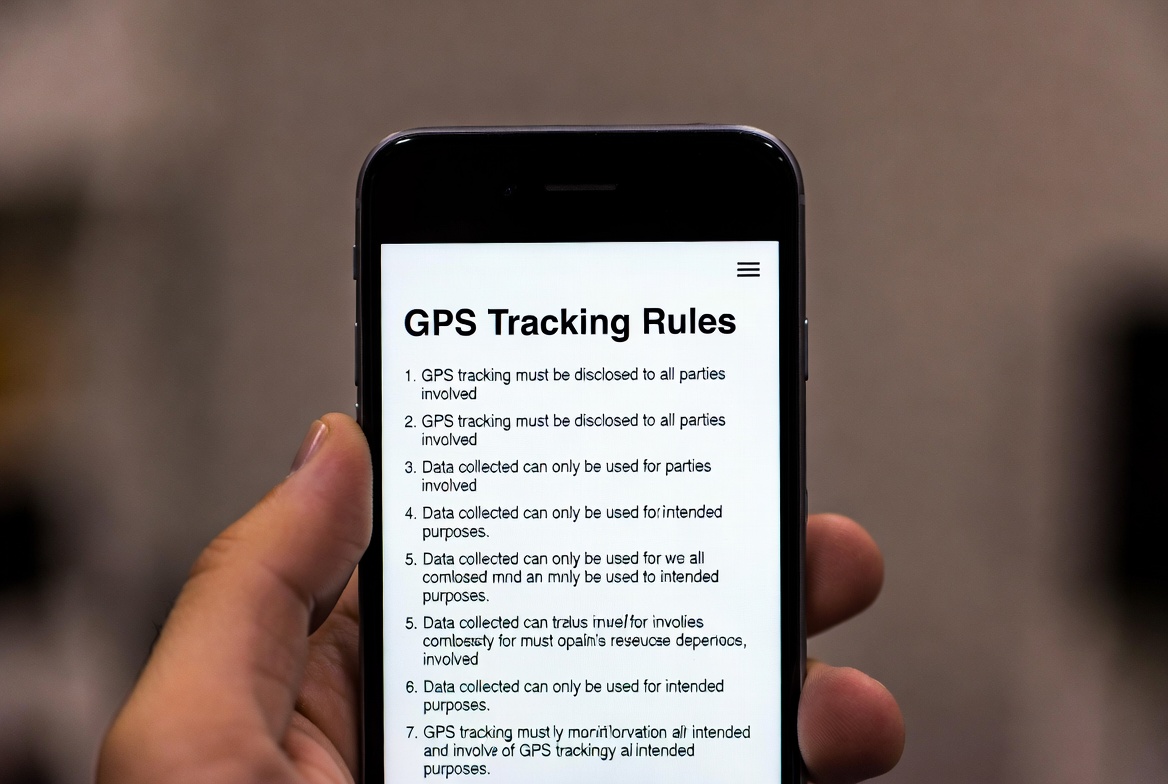
A written agreement, created together, transforms tracking from a parental decree into a mutual understanding. Here are the essential components to include in your GPS tracking rules for teens.
1. The Purpose Clause
"We are using GPS tracking for safety and logistics only. It is not for micromanaging your time or questioning every stop you make."
2. The Privacy Clause
"We agree not to monitor your location constantly. We will primarily use it to check your ETA or if we cannot reach you. We will use geofencing alerts for key locations (school, home) to get automatic updates without actively watching the map."
3. The Communication Clause
"If you are going to be in a location different from what we discussed, you agree to send a quick text (e.g., 'Stopping at Mark's house instead of the library')."
"If your phone battery is dying, you agree to communicate that proactively."
4. The Emergency Clause
"We agree that in any situation where you feel unsafe or need help, you can call or text us immediately, and we will use the GPS to get to you or send help, no questions asked."
5. The Duration and Review Clause
"We will review these GPS tracking rules for teens in six months. As you consistently demonstrate responsibility, we can discuss adjusting how we use this tool."
Choosing the Right Technology for Your Family
The right tool can make following these rules much easier. You need an app that supports the collaborative spirit of your agreement.
1. Built-in Options: A Good Start
Apple's Find My: For iPhone families, this is a simple, free option. It allows location sharing and notifications for arrivals and departures.
Google Location Sharing: For mixed Android/iOS families, this is an easy way to share real-time location for a set period.
Limitation: These lack more robust features like detailed location history or integration with other parental controls.
2. Dedicated Parental Control Apps for Enhanced Safety
For more features that support your family's rules, dedicated apps are the best choice. They provide structure and accountability.
A. mSpy: For Precision and Comprehensive Oversight
mSpy is a powerful tool that excels in precise location tracking and offers a wider suite of features for parents who want a complete picture.

Key Features for Teens: Offers highly accurate, real-time GPS tracking and customizable geofencing. Its location history is detailed, which can be useful for verifying a timeline in case of an emergency or a broken rule.
Best For: Implementing GPS tracking rules for teens who are driving and for families who want the most reliable location data combined with insights into their teen's digital world.
B. Parentaler: For Straightforward and Agreeable Boundaries
Parentaler focuses on simplicity, making it easy to enforce the time and place boundaries you've set together.

Key Features for Teens: Provides clear location tracking and easy-to-set geofencing. Its simple interface makes it less about "spying" and more about clear, automated rule enforcement.
Best For: Families who want a no-fuss app to manage the core agreements around location and screen time without extra complexity.
C. Eyezy: For All-in-One Family Management
Eyezy combines powerful location tracking with other management tools, offering a versatile dashboard for parents.

Key Features for Teens: Includes real-time GPS, geofencing, and a unique "Places" log that categorizes frequently visited spots, providing context without constant monitoring.
Best For: Parents looking for a single app to handle location safety alongside other digital boundaries, like app usage and screen time.
Handling Inevitable Challenges and Violations
What happens when the rules are broken? Perhaps your teen turned off their location or was somewhere they shouldn't have been.
Stay Calm: Avoid reacting in anger. Take a moment to gather your thoughts.
Use the Agreement: Refer back to the contract you both signed. This depersonalizes the conflict.
Seek Understanding: Ask open-ended questions. "The app showed your location was off last night. Can you help me understand what happened?" There may be a valid reason, like a dead battery, or it may signal a need to revisit your agreement.
Apply Logical Consequences: The consequence should be related to the violation. If they turned off location, the privilege of going out without checking in first might be temporarily revoked.
The End Goal: Phasing Out the Training Wheels
The ultimate purpose of these GPS tracking rules for teens is to make the tracking obsolete. As your teen consistently demonstrates good judgment, communication, and responsibility, you should gradually scale back.
This could mean:
Switching from constant sharing to only sharing when they are driving long distances.
Removing geofences for common places but keeping them for new locations.
Relying more on their proactive communication than the app itself.
This gradual release of control is the final, and most important, step in teaching them true independence.
Conclusion
GPS tracking is not a substitute for communication; it's a tool that can enhance it. By approaching it with transparency, collaboration, and a clear set of rules, you can navigate the tricky teenage years with more confidence and less conflict.
You have the power to create a safe environment where your teen can spread their wings, knowing a safety net is securely in place. Start the conversation, draft your agreement, and choose a tool that supports your family's values.
Take the first step toward balanced safety and independence. Explore these trusted solutions and establish your family's GPS tracking rules today.
Frequently Asked Questions (FAQs)
1. Is it legal to track my teenager?
Yes, it is generally legal for a parent or legal guardian to track the location of their minor child. The law recognizes the parent's responsibility to ensure the child's safety and well-being.
2. My teen says tracking is a huge invasion of privacy. How do I respond?
Validate their feelings. You can say, "I understand why it feels that way, and I respect your need for privacy. My most important job is to keep you safe. This isn't about reading your diary; it's about knowing you're physically safe. Let's work together to create rules that you feel are fair." This opens a negotiation rather than a confrontation.
3. At what age should I stop using a GPS tracker?
There is no specific age. The process should be a gradual transition based on demonstrated responsibility, not a birthday. If your teen consistently communicates well, makes safe choices, and adheres to your agreements, you can begin phasing out tracking in the later high school years. The goal is to discontinue its use by the time they leave for college or live independently.