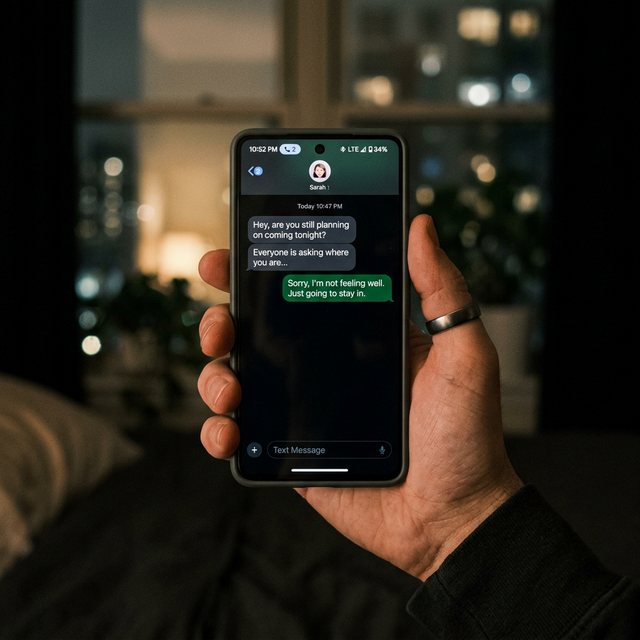
What Does OTP Mean?
OTP has two completely different meanings depending on the context of the conversation. When deciphering the OTP meaning in text, you need to know if your teen is talking about logistics or pop culture.
Meaning 1: On The Phone
The most practical meaning is "On The Phone." It's used as a quick status update.
- Example: "Hold on, OTP with my mom, will text you back in a min."
Meaning 2: One True Pairing
In fanfiction, anime circles, and internet "stan" (super-fan) culture, OTP means "One True Pairing." It refers to a favorite fictional romantic relationship.
- Example: "Zendaya and Tom Holland are my OTP."
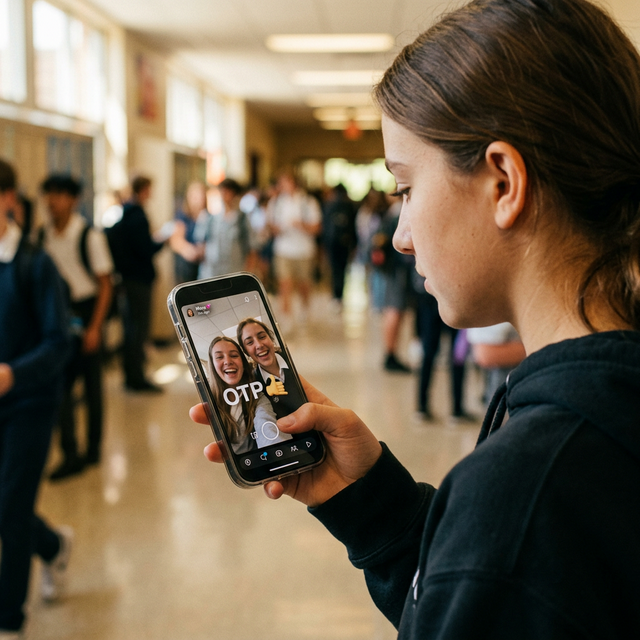
Teens commonly use "OTP" on Snapchat to let friends know they're busy on a call.
Know Who They're Really Talking To
If your teen is always "OTP" with unknown contacts or at odd hours, monitor their call logs and messages, and say plainly that you are doing it.
Monitor Their Calls & TextsPlatform Context: OTP on Snapchat
Because OTP (“On The Phone”) usage often appears in rapid communication, it's incredibly common on Snapchat. Teens frequently send a quick visual "Snap" with the text "OTP" to explain why they aren't replying to messages immediately.

Understanding slang like "OTP" helps parents stay connected without overreacting.
Set Healthy Digital Boundaries
Track who your teen is on the phone with and set time limits for late-night calls — all from your own device.
Start Monitoring Now →The Third Meaning of OTP: One-Time Passwords
Before "one true pairing" reaches a family, OTP already means one-time password — the six digits that arrive by text when someone signs in, resets a password, or confirms a payment. In much of the world, banking and delivery apps have made that the dominant reading: "share the OTP", "OTP not received", "do not share this code with anyone". If your child uses any app with a login code, they already know the word in this sense.
That matters because the code is the account. A scammer who can get a child to read out six digits does not need a password at all; that is account takeover, and the target is usually Instagram, WhatsApp, or a wallet with money attached. The openers are consistent and friendly: "I'm from support", "I sent the code to your number by mistake, can you forward it", "confirm your account or it will be deleted", and giveaway DMs promising a prize for "verification".
One sentence is enough to teach: a code that arrives on your phone is never for someone else. No real company asks you to read one out, and a friend who asks for it has either been hacked or is lying — both are reasons to stop and call them.
If an account has already been taken, the recovery order is: change the password from a device you control, end all active sessions, check which recovery email and phone number are attached for anything you did not add, then turn on login alerts. Prefer an authenticator app over texted codes where the app offers it, because a code read aloud can be replayed and a code inside an app cannot.
Codes are also the fastest way to spot a pattern: a child who suddenly receives repeated login codes for an app they are not using is being targeted, and the fix is to lock the account before the code is guessed or shared. The same one-line rule belongs on any online safety rules list the family keeps on the fridge.
OTP in Fandom: Ships, BROTPs and Where the Word Came From
The "one true pairing" sense didn't start in group chats. It came out of fan culture - fanfiction archives, Tumblr, Wattpad, the comment threads under long-running series - where readers started naming the two characters they wanted together as their OTP. Where "on the phone" describes what someone is doing, this sense describes what someone is a fan of, and the people involved usually don't exist.
The vocabulary around it explains most of what a parent will see. A BROTP is the platonic version, a friendship someone roots for rather than a romance. A NOTP or anti-OTP is a pairing someone actively dislikes, which is why the word turns up in arguments that look alarmingly heated for a discussion about a television show. A multi-shipper roots for several pairings at once, and canon versus headcanon separates what the story established from what the fan has decided is true.
The useful consequence: an OTP message is often evidence of reading, not of a relationship. If a keyword alert fires at eleven at night, the first question is whether the message names people who exist. Character names, series titles, episode numbers, and words like ship, canon, chapter and fandom all point to the fan sense. A classmate's name points to the older sense, and to the same conversation you would have about any crush.
So which of the three are you reading? Three quick tests. Names and a series nearby mean fandom. A reference to a call ("otp with mum", "can't talk, otp") means on the phone. A string of digits, the word code, or "expires in" means one-time password - the sense that deserves a safety conversation, because a code read to the wrong person is an account takeover. Explain that third one directly: no legitimate service asks anyone to read a code aloud, and the person asking is the one to be suspicious of. Where fandom talk spreads fastest, the ephemeral apps do the work, which is what our Snapchat safety guide for parents covers in detail.
One more marker is worth knowing. The fandom sense is nearly always written as a noun you can point at - "they're my OTP", "OTP: Kara and Lena" - while the phone sense stands alone in a sentence about talking. If the word is the subject of the sentence rather than a status, a fan is talking about characters.
What "On The Phone" Means Now: App Calls, Group Calls and Empty Call Logs
The phrase has outlived the technology it describes. A teenager who is otp is usually not on a phone call at all: they are in a WhatsApp voice chain, an Instagram call, a Discord channel with five other people in it, or a Snapchat call that exists only while both screens are open.
That matters because the records differ. A handset's call log lists cellular calls; calls made inside an app live in that app's own call history, or nowhere at all, because some of them leave no trace once they end. The phone's usage screens count minutes per app rather than conversations, so an evening of otp can look like a modest amount of screen time on any dashboard and still have been three hours of talking.
It also changes what "who were you on the phone with?" can honestly be answered. A call at eleven at night may involve six people, none of whom appear by name anywhere, and "no one, it was a group" is a true answer that sounds like an evasion. Asking which app rather than which number gets a real answer far more often.
The practical conclusion for parents is to stop treating the call log as a source of truth and treat it as a partial record. When something matters, ask about people rather than minutes - who do you call, who calls you, and is there anyone in those calls I have not met. Most teenagers will answer that one, because it is about their life rather than their data. The setting that actually changes late-night calling is quiet hours, and our guide to monitoring a teenager's cell phone sets out where those limits sit.
Using OTP Yourself: The Family Version of a Status Update
Parents borrow their children's slang badly more often than they borrow it well, and otp is one of the words worth borrowing. "OTP, call you back in ten" tells a child three things at once - what you are doing, that it is temporary, and that they will hear from you - in a message short enough to send while the call is still going.
What makes it work is the same thing that made it work for them: it closes a loop cheaply. Silence leaves the other person guessing whether you are ignoring them or busy, and "I'm busy" is a mood rather than a plan. A status word with a time attached removes the guess. Teenagers who get that message from a parent tend to send it back, because the exchange has demonstrated that a short message is enough.
The line to keep is between the vocabulary and the oversight. Borrowing otp is a courtesy; using it as the opening line of a message about what you have been reviewing on their phone is not the same move, and it teaches a child that the family's slang is a warning sign. Keep the two habits in separate conversations, even when they happen the same week.
Household norms around this are small and worth writing once: if you are otp, say so; if the call will run long, give a time; and nobody is expected to answer instantly. That is about three lines in a family agreement, and it is the sort of thing that saves an argument a week. The structure for that conversation, including where the phone rules sit next to the courtesy rules, is set out in our guide to building a family digital agreement.
The Parental Angle: Understanding Context and Boundaries
Like many slang terms, "OTP" is inherently harmless. But understanding context is everything. What happens if your teen is constantly "OTP with Sarah" late at night, but Sarah tells you they haven't spoken?
Addressing Secrecy Cues
If slang is being used to mask who your teen is talking to or when, that's a secrecy cue. The goal isn't to ban the acronym "OTP," but to address the secretive behavior.
Practical Steps for Parents
- Set Messaging Time Boundaries: Establish clear rules. A common rule is that phones are charged in the kitchen overnight to prevent 2 AM "OTP" sessions.
- Unknown Contacts: If your teen says they were "OTP" with someone they refuse to name, it's time to investigate unknown contacts. Explain the dangers of talking to unverified people online.
- Use Keyword Alerts: If you are concerned about inappropriate conversations happening over the phone following a text chat, use keyword lists and alerts to flag high-risk terms (like drug slang or self-harm). This is a focused, ethical approach outlined in our social media monitoring guide.
Discover more about parental control features. Or, broaden your knowledge with our Teen Slang Dictionary Pillar Page.