What Does IIRC Mean?
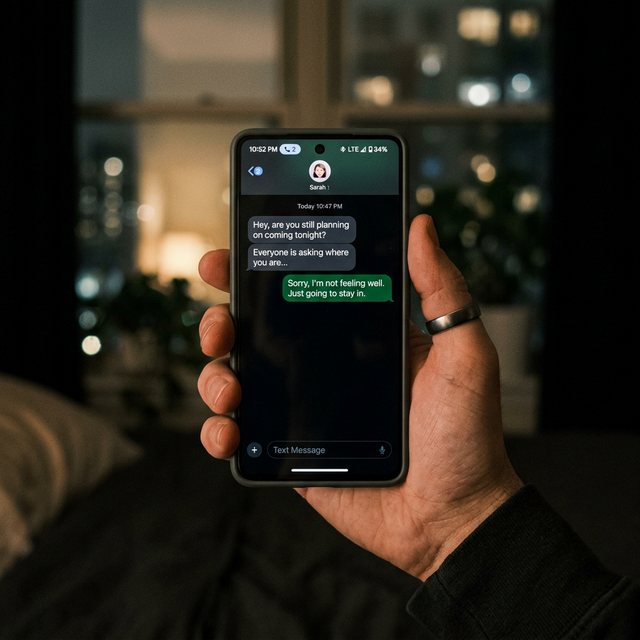
IIRC stands for "If I Recall Correctly" or "If I Remember Correctly."
It is used in texting and online chats to state a fact or detail that the sender believes to be true, while leaving a small margin of error in case they have remembered it wrong.
Examples and Usage
IIRC is frequently used in casual debates, group chats, or when recalling past events.
- Example 1: "IIRC, the math test got moved to Thursday, not Wednesday."
- Example 2: "We watched that movie last summer, IIRC."
Similar Acronyms
- AFAIK: As Far As I Know
- TBH: To Be Honest
- FWIW: For What It's Worth
Stop Guessing What They Mean
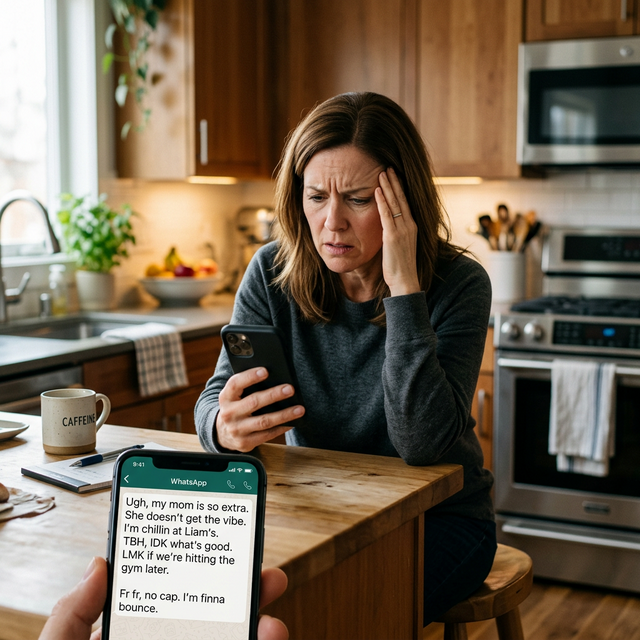
Teen slang is constantly evolving. Get alerts when they use risky terms and view the full context of their conversations.
See Their Actual TextsIIRC Inside an Argument: Who Is Hedging, and Why
In a friendly thread, IIRC is a courtesy. In a tense one the same four letters do harder work: they let the sender accuse someone without appearing to accuse them.
Compare two sentences. "You said you'd pay for the tickets" is a confrontation. "IIRC you said you'd pay for the tickets" is the same accusation with a built-in escape hatch — if challenged, the sender can say they only meant they might be misremembering. That is why IIRC shows up in group chats with an audience: it applies pressure while keeping the sender safe.
Teen A: "we're getting tickets tonight"
Teen B: "IIRC you said you were paying for all of us"
Teen A: "I said I'd check with my mum"
Teen B: "IIRC it was 'don't worry about it'"
Read that as a count rather than a definition. One IIRC in an exchange is ordinary uncertainty about a date or a homework page. A second one inside the same argument, both attached to something the other person promised, is pressure — the hedge is doing the pushing.
The version that needs attention is IIRC welded to "you always" or "you never". At that point the acronym is no longer about memory at all; it is a way of describing someone's character with a deniable prefix, which is how a lot of quiet cyberbullying between friends reads to an adult who finds it afterwards.
When you do see it, resist the job of judge. Working out who remembered correctly is the trap: you become an arbiter with no evidence, and both children stop telling you things. Ask about the relationship instead — "that thread sounds tense, has it been like that for a while?" — because the memory dispute is almost always the surface and the friendship is the subject.
The Honesty Ladder: IIRC, I Think, I'm Pretty Sure and AFAIK
English has a set of hedges that rank how sure a speaker is, and teenagers use them more precisely than most adults assume. Read as a ladder from most to least confident, they turn a message that sounds evasive into one that is legible.
| Phrase | What it claims | Where the error would sit |
|---|---|---|
| no hedge | A direct statement of fact | Nowhere - this is the claim they will be held to |
| I'm pretty sure | Recalled with confidence | A small detail, usually a time or a number |
| I think | An opinion, or recall without a source | The whole claim; it was never a promise |
| IIRC | If I remember correctly - an explicit memory claim | Their memory, not the world |
| AFAIK | As far as I know - relayed information | The source they heard it from |
The bottom two rungs are not evasions. A teen who writes "iirc practice got moved" is doing what an adult would call sourcing: flagging that the fact came from memory rather than from the timetable. The move that gets a straight answer is to check the source together - "who told you?" - not to treat the hedge as a lie. Treated as dishonesty, "iirc" teaches a child to drop it and state things flatly, which makes the next conversation less accurate rather than more.
The mirror image is also true. A hedged claim about something that matters - where they were, who they were with - deserves exactly one follow-up, and the follow-up should be a fact question ("what time did the bus come?") rather than an accusation. If the answer climbs from "iirc" to "I don't know" to "why are you interrogating me", the hedge was never the problem; the doorway was.
Two lookalikes worth knowing. "IRC" on its own is Internet Relay Chat, an old chat network, not a hedge - in a teen thread it is nearly always a typo for IIRC. And an "iirc" attached to a link is a citation habit: the sender is telling you they haven't verified it either, which matters when the link is about health or safety. That is the same principle behind monitoring a child's phone without spying - read the whole exchange, not the word.
The Parental Angle: Reading Tone in Teen Texting
IIRC is a completely harmless abbreviation. However, parents often encounter it when trying to interpret the tone of a stressful conversation, an argument, or a potential bullying context.

Text-based tone is notoriously difficult to read, making it hard to spot passive-aggressive communication.
Tone in texting is notoriously difficult to read. A sentence that includes "IIRC" can range from genuinely helpful ("IIRC, the homework is page 20") to passive-aggressive ("IIRC, you said you'd pay for the tickets").
How to Handle Texting Conflict
If you see acronyms like IIRC used in heated exchanges:
- Don't jump to conclusions: Without vocal tone or body language, do not assume malice.
- Ask for context: Use our weekly phone check framework to ask, "Hey, this conversation looks a bit tense. Is everything okay with you and Emma?"
- Watch for patterns: Harmless disagreements happen. But if a "friend" constantly uses phrases like IIRC to gaslight or belittle your teen's memory of events, it might cross into cyberbullying territory.
Discover more abbreviations in our Teen Slang Dictionary and explore ethical keyword lists and alerts.
IIRC in Class Group Chats: How a Hedge Turns Into a Fact
The place IIRC does the most damage is not an argument. It is a class group chat at nine the night before something that matters, where a hedged guess is repeated until the hedge falls off.
It runs in three steps. "iirc the test moved to Thursday" from someone who half-remembers. Then "the test is Thursday" from a second person, who read the first message as a fact. Then "don't revise for Wednesday, it's Thursday" from a third, who is now passing on a timetable that never existed. The person who was unsure said so; nobody after them did. The child who repeats it is not lying, they are quoting someone who was quoting someone.
Parents meet the wreckage the next morning, as a wasted revision night or the wrong uniform, and the instinct is to blame the phone. The more useful reading is that this is how information moves through every group, adult ones included, and the hedge was the only part of the message carrying the caveat. It survives being screenshotted less well than the claim does, which is why the version quoted back later is always the confident one.
The same three steps run on people rather than timetables, and that version is worse. A hedged "iirc she was at that party" becomes "she was at that party" by the third message, and by the time it reaches a parent the hedge is long gone and the claim is about someone's reputation. Asking "who told you?" then produces a classmate who heard it from a classmate, which is why the answer to a rumour is almost never the source of it.
Two habits are worth teaching, both cheap. Keep the hedge when passing a fact on - "someone said iirc" rather than "it's Thursday" - which teenagers adopt quickly once they see it save them an argument. And check the source: a claim about school logistics has an official version in the portal, a teacher's email or the timetable on the fridge, and looking takes a minute. That is a study skill before it is a safety skill, and the same instinct is what makes a child harder to mislead later. Rules that agree at school and at home are covered in our guide to keeping school and home phone policy consistent.
When IIRC Is Standing In for a Source
The most confident use of IIRC is not a hedge at all. "iirc there was a study about this" sounds like a citation and carries none of one: no author, no title, no date, and no way for the reader to check. The hedge is doing the work of a reference while protecting the sender from being held to it.
It works because of what forwarding does to it. The person who writes "iirc" knows they are unsure. The person who repeats the claim drops the qualifier, because repeating someone else's uncertainty feels pedantic. By the third hop the sentence has the shape of a fact, and the only person who knew otherwise is several messages back and no longer being read.
Testing it does not have to become a debate. One question is usually enough: "where did you see that?" A teenager with a real source will produce a link, a name, or "a video my mate sent", and each of those is an honest answer. A teenager with a remembered claim will say something like "everyone knows it", which is the useful information - not that they lied, but that the claim never had a source at all. The follow-up is one minute of searching together, which is a study habit before it is anything else.
It is worth modelling at home, because the same drift damages household rules. "IIRC we said ten o'clock" invites an argument about memory; "it is on the note on the fridge" ends one. Parents who attach receipts to their own recall - the message, the date, the note - get more compliance and fewer fights, and the habit is easier to defend when a child uses it back. The parts of this that belong in a conversation rather than a rule are laid out in our guide to talking to kids about phone tracking without creating conflict.
Tone is Everything
Knowing that "IIRC" means "If I Recall Correctly" doesn't tell you if your teen is being bullied or gaslit by friends. To understand the true tone and context of their digital life, you need the full picture.
Explore Parental Dashboards →